Sangam Collaborative supports long-term improvements in health, education and nutrition outcomes across five national priority states: Jharkhand, Assam, Chhattisgarh, Odisha and Bihar, where an estimated 70 million people experience multidimensional poverty.
Philanthropy • Government • Ecosystem partners • Community
0Focus States
0People
0Year Ambition
About Sangam Collaborative
By convening the complementary capabilities of philanthropy, technical experts and implementation partners, and institutions across India and the world, the Sangam Collaborative will work alongside government to strengthen public systems and improve the quality, reach and effectiveness of essential services, particularly for underserved communities.
The work is concentrated across five national priority states: Jharkhand, Assam, Chhattisgarh, Odisha and Bihar, home to 70 million people experiencing multidimensional poverty.
The Collaborative will also work closely with local and context-relevant technical experts to transform how basic services, such as health and education are delivered, while ensuring consistency, quality, equity and inclusivity.
The Gap
What is MDP?
Multidimensional poverty looks beyond income to capture the overlapping hardships that shape an individual’s life such as deprivations across health, education, nutrition, and human development. It measures poverty the way people experience it: as several hardships happening at once.
Left unaddressed, MDP compounds across generations.
Addressit,andthecycleofpovertycanend.
0
Indians in MDP
1 in 7
Indians live in MDP
0
of households experiencing MDP have at least one undernourished member
0
of recent mothers in households experiencing MDP received fewer than 4 antenatal visits during pregnancy, or gave birth unassisted
0
of households experiencing MDP have no one aged 10 or older who has completed six or more years of school
Across the five national priority states, Jharkhand, Assam, Chhattisgarh, Odisha and Bihar, an estimated 70 million people experience multidimensional poverty.
These focus states experience an average multidimensional poverty rate of 26%.
2.22x
Higher MDP rate in focus states compared to the rest of India
26%
Focus States
12%
Rest of India
Why public systems
0
spent by the Centre and States combined on the social sector in FY25, of which $109B went to education and $72B to health.
Government accounts for 95% of all social-sector spend nationally.
This means the opportunity in front of us is enormous: by strengthening public systems reaching every citizen, we can transform millions of lives.
How We Work
The collaborative will focus on improving institutional capabilities, talent, leadership, processes and data systems to ensure efficient service delivery at scale.
Public Systems Strengthening
Strengthening public systems by transforming how health and education services are delivered.
Government
Leadership
Building leadership and governance capability within public systems
Digitisation
Enabling data-driven governance and operational efficiency
Sangam Collaborative will deliver impact through state-focused government systems
0 gram panchayats
0 officials working across 0 districts
Thousands of teachers, administrators, and other public employees
Community
Decentralisation
Strengthening community institutions and local decision-making
Inclusion
Embedding participation of marginalised and underserved communities in decision-making
Sangam Collaborative will directly engage with community-focused government systems
0 ASHA workers
0 self-help groups
Thousands of hyper-local NGOs and millions of families
Systems Strengthening
Two systems. One shared ambition.
Strengthen Education Systems
Create future-ready skills and education
Strengthen learning environments that prepare children academically and with the social, emotional and life skills required for the future
Strengthen governance through data systems
Enable education leaders to use data for planning, monitoring and improving school and system performance
Enable community ownership
Strengthen the participation of families, communities and local institutions in supporting children's education
Build inclusive and culturally responsive models
Develop approaches that respond to language, culture, geography and the needs of underserved communities
Strengthen Health Systems
Strengthen compassionate and skilled health leadership
Build the capabilities of public-health leaders, managers and frontline professionals
Enable digitised, data-driven systems
Improve the use of digital tools and data for planning, service delivery, supply chains and performance management
Build decentralised, community-led solutions
Strengthen local institutions and frontline networks so that services respond to community needs
Ensure inclusion to reach underserved populations
Design delivery models that reach remote, tribal and vulnerable populations
Up to 10x greater value unlocked
Partners
Anchored by Indian leadership and strengthened by global expertise, the Sangam Collaborative convenes philanthropic, technical and development partners to work towards strengthening core capabilities that accelerate better health and education outcomes for communities.
Join Sangam Collaborative
Choose how your organisation can contribute to stronger public systems and lasting change.
01
Invest
Catalytic capital, networks, and expertise
02
Collaborate
Government partnership for scale
03
Implement
Program delivery and execution
04
Share Expertise
Research and technical support
05
Innovate
Technology, AI, and digital public infrastructure
06
Stand with Communities
Local adaptation, accountability, and sustainable change
Case Studies
Proof that systems change can scale.
Two states. Two sectors. One shared proof of impact.
Public Health - Bihar
Digitally enabled. Capability driven. Built for scale.
The collaborative draws particular inspiration from Bihar, where long-term collaboration between the Government of Bihar and partners such as the Piramal Foundation has helped strengthen the state's public health institutions, frontline capabilities, and data systems.
Together, these reforms have contributed to a 70% reduction in maternal mortality, an increase in institutional deliveries from 19% to 81%, and Bihar achieving its highest-ever utilization of National Health Mission funds.
0Districts
Bihar's Public Health Landscape Today
01
#1 in India
Top-ranked state in digital drug & vaccine supply chain management; 100% of facilities digitised
02
0
of non-AYUSH facilities digitised for patient services, enabling 2 lakh+ digital OPD consultations per day
03
0
health facilities adopted digital quality management through the SaQshi tracking tool; 1,026 went on to achieve State or National Quality Assurance Standards (NQAS) certification
04
0
health facilities reached as the AMANAT clinical mentoring model scaled from an eight-district pilot, later adopted by the Government of Bihar as Jeevandeep
05
0
underperforming health facilities saw improved Caesarean-section readiness, strengthening emergency obstetric and newborn care across Bihar
06
0
First Referral Units statewide covered by specialist mapping, ensuring the right specialists are available where complex deliveries need them most
07
0
health workers across Bihar built leadership capabilities through Personal Transformation and Team Building workshops
08
Real-time
Command and Control Centres established across Bihar, enabling leaders to monitor service delivery, resources and performance through integrated dashboards
The Bihar experience demonstrates how public healthcare systems can be strengthened at scale, sustainably.
Public Education - Rajasthan
Leadership led. Learning focused. Scaled through systems.
Since 2008, Piramal Foundation has partnered with the Government of Rajasthan to strengthen the state's public education system by building leadership, institutionalising reforms, and embedding data-driven governance.
Beginning with a pilot in 100 government schools, the Foundation helped scale a systems-first model that strengthened education leadership, empowered teachers, and integrated Social, Emotional and Ethical (SEE) Learning into classrooms and school culture.
Together, these reforms transformed Rajasthan from one of India's lowest-performing education systems into one of its strongest, with the state ranking #2 nationally in the National Achievement Survey (2018) and being recognised as India's Most Improved State in Education (2022).
Since2008
From100 schools
Rajasthan's Public Education Landscape Today
01
0
students saw improved learning outcomes, a 12% year-on-year increase
02
0
students reached as a 100-school pilot scaled into a statewide transformation
03
0
education leaders trained through SIEMAT, influencing 3,700 schools and 8 million students across Rajasthan
04
#2 Nationally
Rajasthan's rank in the National Achievement Survey, conducted in 2018
05
Most Improved State
recognition Rajasthan received for Education in India, 2022
06
0
Social, Emotional and Ethical Learning competency score reached in 2023 among Grade 10 students in Jhunjhunu, up from 59.7% in 2022
07
0
adolescent girls given expanded opportunities through life skills and vocational education
08
0
schools reached nationally, along with 500,000 teachers and 200,000 government officials, as the Rajasthan model was adapted across India
By embedding innovation into Rajasthan's public education system, the state has built a model since adapted across India, proving that strengthening public systems creates sustainable, large-scale impact.
Impact Stories
Change becomes meaningful when it is felt in people's lives.
Explore stories from public systems and communities working together towards lasting change.
Visually impaired Sonmoni gives birth
Visually impaired Sonmoni gives birth
Xushrukha helped visually impaired Sonmoni in Assam deliver a healthy baby through dedicated grassroots care.
Read Full Story
Visually impaired mother Sonmoni gives birth with our support
This story of Sonmoni, a visually impaired beneficiary from the mountainous village of Hatigarh, Assam showcases how we enhance maternal health at the grassroots.
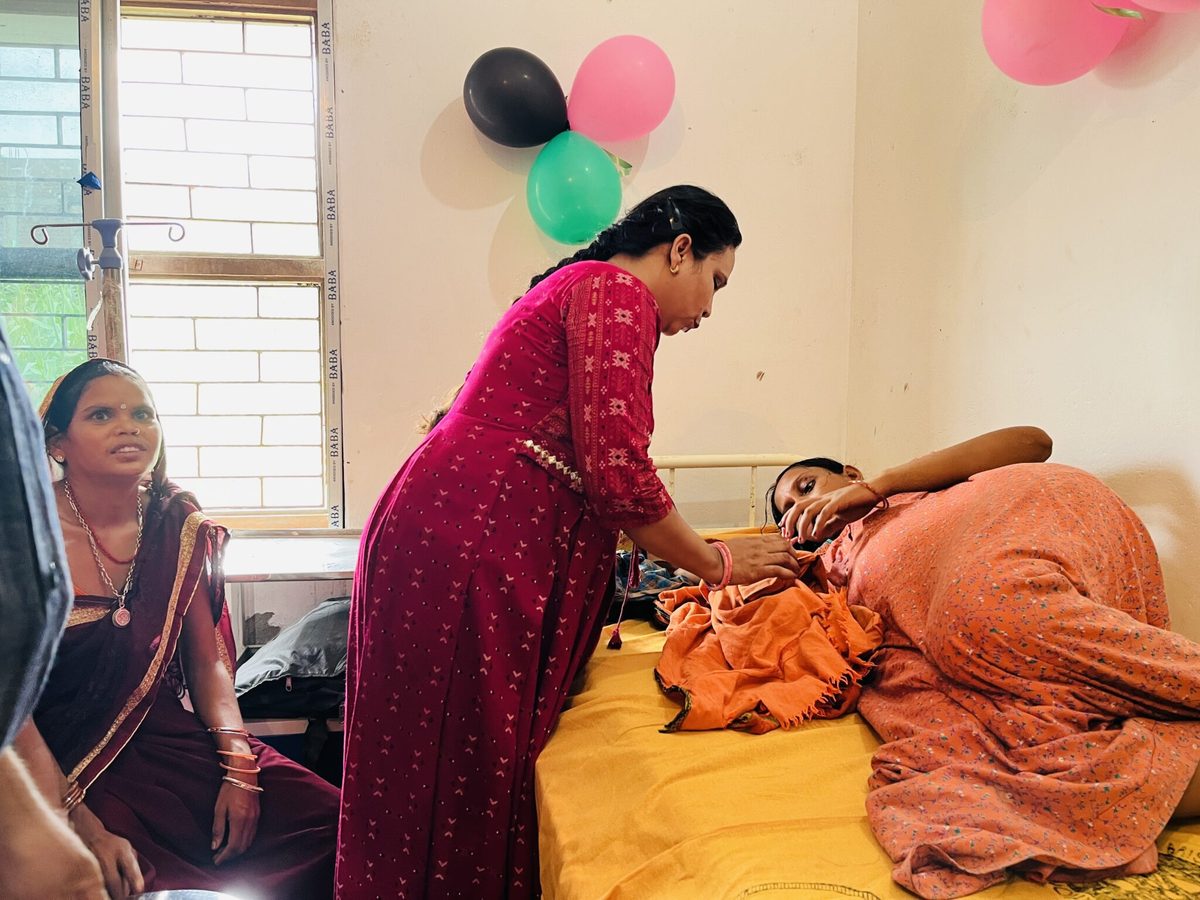
Sonmoni lost her sight at the age of two and was living with her husband, who was also partially visually impaired. They were expecting their second child when she became a part of our Xushrukha project. Despite her visual impairment and inadequate health infrastructure in her village, we supported her through her pregnancy and ensured that she delivers a healthy child.
Partha, our field supervisor, and Jayati, an Accredited Social Health Activist (ASHA) worker recognized her need for special care. They provided crucial holistic support through medical resources and transportation for regular check-ups while ensuring that all health protocols were strictly followed.
Sonmoni expresses her gratitude:
Partha and Jayanti went beyond their call of duty and gave us immense emotional strength. Their consistent, comprehensive approach ensured that my pregnancy progressed smoothly, and I gave birth to a healthy baby boy.
Telemedicine eases Budhayrien's knee pain
Telemedicine eases Budhayrien's knee pain
Telemedicine helped Budhayrien, 68, in Chhattisgarh access free specialist care, easing years of knee pain.
Read Full Story
Telemedicine brings remote relief to Chhattisgarh
Budhayrien Batti is a 68-year-old woman from Chhattisgarh. Her story highlights how telemedicine ensures that citizens gain affordable access to specialized medical care.
Budhayrien lives in Pharasgaon and is engaged in farming all year round with daily strenuous physical labor. She had been suffering from knee pain, weakness, and loss of body weight for 2 years. She consulted several private clinics, but they were costly and ineffective.
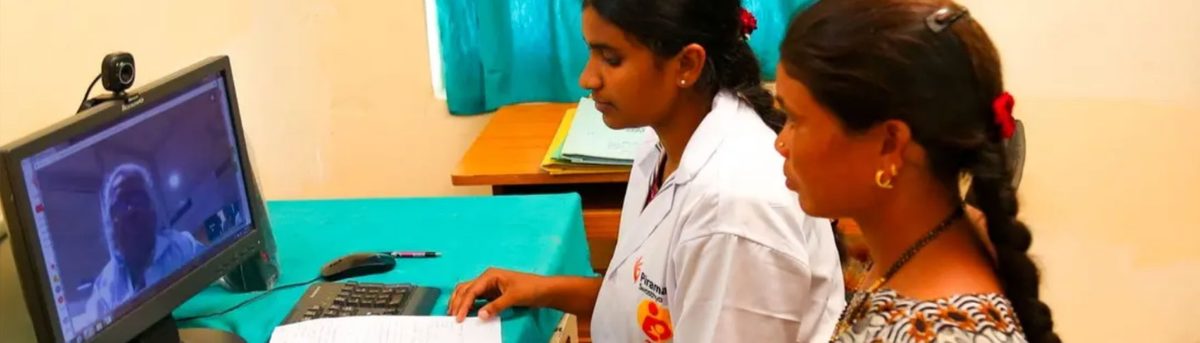
During door-to-door community mobilization by our team, she was informed about the Telemedicine consultancy services being offered in Chhattisgarh. Through this intervention, we provide free online consultations and treatments at the last mile.
Budhayrien describes her experience:
When I heard about telemedicine, I booked an appointment, and the nurse connected me to a specialist doctor in the city. He examined my report through the AMRIT application and diagnosed me with Patellofemoral pain syndrome. He suggested immediate lifestyle changes such as controlling my sugar levels and gave me free medication. Since then, I have seen a significant improvement in my condition!
This service has drastically improved the lives of beneficiaries in remote and underserved regions by providing them with easy access to specialists.
Priyanka's dream centre welcomes her son
Priyanka's dream centre welcomes her son
Priyanka gave birth in the newly built Khagaria health centre her advocacy helped fund and bring to life.
Read Full Story
In the heart of Madhavpur village, nestled within the Parbatta Block in Khagaria District, lived Priyanka, a common girl with uncommon dreams. Her life was woven together with the threads of simplicity tied to the land by her husband’s toil as a low-wage farmer. They faced each day with resilience, despite the challenges that life in the village often presented.
As Priyanka’s belly swelled with the promise of new life, she embarked on a journey that would become both a physical and emotional challenge. The nearest Primary Health Center (PHC) was merely 15 kilometres away, but the road was riddled with potholes and dust, where even the strongest of spirits could falter.
Many times, Priyanka missed her antenatal appointments due to the difficult journey to PHC. Each missed visit gnawed at her maternal instincts, filling her with a mix of anxiety and hope. She longed for a different reality, where the health centre was within reach, where she could receive the care she needed without sacrificing her comfort and the well-being of her unborn child.
One fateful day, during her visit to the PHC, Priyanka’s eyes fell upon the dilapidated health centre of her own village. A spark ignited within her as she imagined an alternate reality – a world where this very centre would stand strong, operational, and capable of providing the care she and her fellow villagers deserved. With the tenacious resolve that only a mother-to-be could muster, she dared to dream of a future unburdened by the hurdles of unpaved roads and distant medical facilities.
The universe seemed to conspire in her favour as the Aspirational Bharat Collaborative program, led by Piramal Foundation, entered the scene. Prafulla Jha, a representative of the foundation, began advocating for the long-forgotten funds allocated to the Rogi Kalyan Samiti. A symphony of voices joined the chorus of Priyanka’s dreams, as village elders, led by the Mukhiya (Sarpanch), and the dedicated Medical Officer In charge of PHC Prabatta, worked hand in hand.
And then, as if the universe itself was attuned to their hopes, a lumpsum amount of two lakh rupees was sanctioned for the cause. The village Health and Wellness Centre began to take form – brick by brick, wall by wall. The colours of fresh paint danced on the walls, mirroring the colours of life within Priyanka’s womb. As the building progressed, so did her baby’s movements, each flutter and kick serving as a reminder of the intertwined destinies of the centre’s completion and her impending motherhood.
Amidst the bricks and mortar walls, a new dream sprouted. The Mukhiya donated a piece of land that would transform into a lush green expanse in front of the Health and Wellness Centre. This gesture not only paved the way for a road connecting the centre to the main road but also ignited renewed hope. No longer would the rains bring stagnation and fearsome wild insects and reptiles; but they would now bring growth and connection.
As the inaugural ceremony commenced, a sense of accomplishment filled the air. Dignitaries from the Health Department, community members, and representatives from the Piramal Foundation shared their thoughts on the journey that had led them to this point. Amidst the speeches and applause, Priyanka’s contractions began. In an almost poetic alignment of fate, her first delivery was about to take place in the very place that symbolised rebirth and renewal.
Guided by the skilled medical staff that the transformed centre now boasted off, Priyanka gave birth to a baby boy within its very walls. Her newborn’s cries seemed to harmonise with the celebrations outside. The villagers rejoiced not just at the inauguration of the new centre, but also on the birth of a precious life that had chosen this significant day to make an entrance.
In the embrace of the newly inaugurated Health and Wellness Centre, Priyanka held her son close, her heart brimming with gratitude. The dreams she had dared to dream, the pains she had dared to endure, had come to fruition in a way she could have never imagined. In that moment, the centre wasn’t just a building; it was a testament to the power of collective dreams and a promise for generations to come – a promise that, in the face of adversity, love and hope will always find a way to bloom.
Gurubari rises past tragedy to excel
Gurubari rises past tragedy to excel
After losing both parents to tragedy, Gurubari used scholarships to excel academically and pursue her ambitions.
Read Full Story
15 years old Gurubari is greeted by chirping fluffy feathery colourful chicks following the waddling hen on the winding roads, farmers winnowing rice, and children giggling and playing with local broken toys as she walks quietly towards her village Pakhanguda in Nabrangpur district of Orissa from her current residential Government SSD Girls High School in Kotraguda. As she treads the winding path, she cannot help but think about the fateful tragedy that shattered her family sometime ago when they were residing in a close-knit community in Bhatra Sahi, that comprised of only 12 homes.
One day on coming back from the market, she found that her modest dwelling in Bhatra Sahi had burned down to ashes due to a kerosene lamp. Her father was dumbstruck and Gurubari was in panic as her mother was nowhere to be seen. In the ashes were her mother’s mangled bangles and her anklets. The police arrested her father Balibhadra Bhatra as a suspect in the incident and he was sentenced to Chaunriaguda jail. Later, he also died in the jail due to food poisoning in May 2023. This twin tragedy shattered Gurubari’s world as she cried her heart out as her future looked bleak.
Gurubari’s family consists of her older brother, Jagannath Bhatra, currently employed as a labourer at the age of 21, and her sister, Basmati Bhatra, who is married to a resident of Ratadi-Inampur village in Koraput district.
Gurubari was on the verge of dropping out of school when she found solace and support from her extended family, including her uncles. Gurubari’s determination and tenacity became evident during her 9 th and 10 th grade years when she
successfully navigated the complexities of scholarship applications. With unwavering resolve, she meticulously gathered all necessary documents, a testament to her commitment for her education. She received INR 6250/- as the Pre-Matric Scholarship, supplemented by an additional sum of INR 950/- as a girls’ incentive and INR 300/- for essential writing materials. Moreover, Gurubari’s friend Sukri Jani from Papadahandi also offered financial assistance during her stay at the residential school in Kotraguda.
This financial aid not only alleviated the burden off her family but also empowered Gurubari to focus
on her studies without worrying about financial constraints.
Gurubari’s dedication bore fruit when she passed the Annual High School Certificate exam in 2023 with flying colours, securing an impressive 74% (446/600 marks). This remarkable achievement positioned her for further academic pursuits and marked a significant milestone in her educational journey.
Gurubari experienced a pivotal moment when she received the scholarship, a turning point that fueled her aspiration and she completed her 10th grade. Another significant achievement in Gurubari’s life was securing a seat at the SSD Higher Secondary School in Karchamal.
Her other avid interests include volleyball, and she actively participates in the Sargiful festival. Gurubari’s future vision is to engage in Government service, drawing inspiration from the ideals of the late Dr. APJ Abdul Kalam. Her story serves as an inspiration to overcome obstacles and pursue one’s goals with unwavering dedication.
Data-driven care strengthens Bihar health
Data-driven care strengthens Bihar health
Data-driven governance in Nalanda helped identify high-risk pregnancies early, strengthening Bihar's health systems.
Read Full Story
This is a story from Nalanda district, Bihar that demonstrates how our work has fanned the winds of change, improved health outcomes significantly and touched lakhs of lives across the state.
Behind the photo lies a heartwarming change story of how real time monitoring of the widespread public healthcare operations in Bihar has led to improved accountability, reduced human error, lower costs while enabling better utilization of infrastructure.
In Nalanda district, the anaemia prevalence is 61.7%. A thrust on adoption of digital tools resulted in availability of quality data (which is key in any decision-making), thus giving a boost to data-driven governance at Health and Wellness Centres (HWC). The Nalanda district administration, equipped with data, was able to identify 4 High-Risk Pregnancy (HRP) cases, all of who were suspected severely anaemic pregnant women. These women were administered Iron Sucrose after referral to the District Hospital.
A mechanism has now been established at HWC, Deepnagar for screening of all pregnant women for HRP. What is heartening is that the civil surgeon has also directed that all HWCs in Nalanda have such a mechanism in place which will go a long way in stemming maternal mortality rates!
Command & Control Centre, Bihar
Started in 2021 in partnership with the Department of Health and Bill & Melinda Gates Foundation, the aim was to build a future ready, National Digital Health Mission (NDHM) compliant health system ensuring continuum of care for all its citizens. Implemented across 37 district hospitals in Bihar , the Centre has now been successfully handed over to the government, and is fully owned and operated by the government – a mark of its success. Today, it is known as Swasthya Samiksha Kendra.
Decision makers are making informed decisions based on data including patient flow, service rendered to patients, key health indicators among others. This has brought about better patient health outcomes and gone a long way in bringing about transparency and building public confidence in public healthcare systems.